

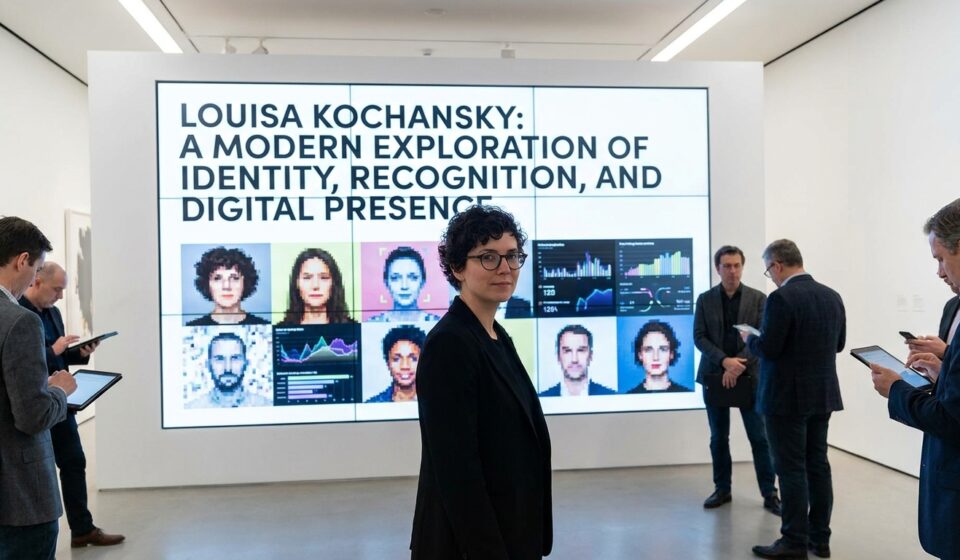

In today’s interconnected digital world, names can quickly become points of curiosity, search interest, and cultural discussion. Among such distinctive identities is “Louisa Kochansky,” a name that carries an elegant, international tone and naturally invites attention. Whether encountered in academic contexts, creative spaces, professional environments, or online searches, the name stands out due to its refined structure and memorable sound.
While publicly available information about Louisa Kochansky may not always be widely documented or standardized across major sources, the growing interest around unique personal names reflects a broader trend in how modern audiences engage with identity, visibility, and digital presence.
This article explores the significance of the name Louisa Kochansky in terms of identity, cultural interpretation, online visibility, personal branding, and the evolving nature of recognition in the digital age.
The Power of a Distinctive Name
Names play a crucial role in shaping first impressions. A name like Louisa Kochansky immediately carries a sense of sophistication and individuality. “Louisa” is a classic given name often associated with elegance, literature, and historical depth, while “Kochansky” suggests Eastern or Central European linguistic roots, giving the full name a multicultural and refined character.
Together, the combination creates a strong identity that feels both familiar and unique. In a world where millions of names are encountered online every day, distinctiveness becomes a powerful asset.
A memorable name can influence:
- Recognition in professional environments
- Online search visibility
- First impressions in communication
- Cultural and personal identity perception
- Memorability in digital spaces
This is why names like Louisa Kochansky often attract curiosity even without extensive background information.
Identity in the Digital Age
The concept of identity has changed significantly in the modern era. Traditionally, a person’s recognition was limited to their immediate community, profession, or geographic region. Today, digital platforms allow identities to extend far beyond physical boundaries.
Search engines, social media platforms, academic references, and digital publications all contribute to shaping how names are perceived globally.
Louisa Kochansky represents the kind of identity that can naturally gain attention in this environment because of its distinctiveness. Even without widespread public data, the structure of the name itself makes it recognizable and searchable.
Modern identity today is shaped by:
- Online presence
- Search engine results
- Professional contributions
- Social media activity
- Digital footprint
- Creative or academic work
This means that names are no longer just labels; they are evolving digital identifiers.
Cultural and Linguistic Interpretation
One of the most interesting aspects of the name Louisa Kochansky is its linguistic composition. “Louisa” is widely used across European languages and often carries meanings associated with fame or warrior heritage in its historical roots. It is a name found in literature, royal history, and classical culture.
The surname “Kochansky” appears to have Slavic origins, which may connect it to Eastern European naming traditions. Such surnames often carry historical or geographical significance, reflecting ancestry, occupation, or regional identity.
This combination of Western and Eastern linguistic elements creates a multicultural impression. It reflects how modern identities often blend different cultural influences, especially in globally connected societies.
The Role of Curiosity in Online Recognition
In the digital era, curiosity is one of the strongest drivers of attention. When users encounter a unique name like Louisa Kochansky, they often search for additional information simply because the name feels distinctive and meaningful.
This behavior is part of a larger trend in online interaction, where unfamiliar or elegant names spark interest and exploration.
Curiosity-driven searches often lead to:
- Increased visibility of the name online
- Growing search engine interest
- Repeated mentions across platforms
- Greater awareness of the identity
Even without extensive public records, curiosity alone can elevate a name’s digital presence over time.
Personal Branding and Modern Identity
In today’s world, personal branding is not limited to celebrities or public figures. Anyone with an online presence contributes to their own digital identity, whether intentionally or not.
A name like Louisa Kochansky has strong potential for personal branding due to its elegance and memorability. It carries a professional and refined tone that could easily be associated with fields such as:
- Academia
- Literature and writing
- Arts and creative industries
- Research and education
- Media and communication
- International professional work
Strong personal branding is built on consistency, recognition, and emotional impression, all of which are influenced by how a name is perceived.
Digital Visibility and Search Culture
Search engines have transformed how people discover and interpret names. A distinctive name is more likely to stand out in search results compared to common or widely shared names.
Louisa Kochansky benefits from this dynamic because it is unique enough to be individually identifiable. In digital search culture, uniqueness improves:
- Ranking potential
- Information clustering
- Identity recognition
- Online discoverability
As a result, names that are less common often gain stronger visibility over time as more users search for them.
The Psychology of Name Recognition
Psychologically, humans tend to remember names that are both rhythmic and distinctive. Louisa Kochansky has several qualities that support memorability:
- A balanced syllable structure
- A familiar first name paired with a unique surname
- A smooth phonetic flow
- A formal yet approachable tone
This combination creates cognitive ease, meaning the brain finds it relatively easy to store and recall the name.
Names that achieve this balance often remain in memory longer, even after a single exposure.
Global Identity and Cultural Fluidity
In the modern globalized world, identities are no longer confined to one region or culture. Names frequently travel across borders, languages, and digital platforms.
Louisa Kochansky reflects this global identity trend. It feels internationally adaptable, meaning it can be recognized and pronounced in multiple linguistic environments.
This cultural fluidity is important in today’s interconnected world, where professional and creative identities often operate on a global scale.
The Evolution of Public Recognition
Public recognition today is not limited to traditional fame or media coverage. It can also emerge from academic contributions, professional work, creative output, or digital engagement.
Even without widespread mainstream recognition, a name can still develop presence through:
- Online mentions
- Professional directories
- Academic citations
- Social or creative platforms
- Digital networking spaces
Louisa Kochansky represents how identity can exist in both visible and subtle forms within the modern information ecosystem.
The Importance of Individual Identity
At its core, the interest in names like Louisa Kochansky reflects a broader human fascination with individuality. People are naturally drawn to identities that feel unique, meaningful, or culturally rich.
In a world where millions of names and profiles exist online, individuality becomes a defining feature of recognition.
A distinctive name helps establish:
- Personal uniqueness
- Emotional identity
- Professional differentiation
- Cultural presence
- Long-term memorability
These elements all contribute to how individuals are perceived in both digital and real-world contexts.
Future Perspectives on Digital Identity
As technology continues to evolve, identity will become even more integrated with digital systems. Names will play an increasingly important role in how people are recognized across platforms, professions, and global communities.
Louisa Kochansky reflects the type of identity that fits well into this future landscape—distinctive, adaptable, and globally recognizable.
In a future driven by digital communication, such names may gain even greater importance in shaping personal and professional visibility.
Conclusion
Louisa Kochansky represents more than just a name—it reflects the evolving nature of identity in the digital age. With its elegant structure, cultural depth, and memorable sound, it naturally attracts curiosity and recognition.
In a world where digital presence plays a central role in how identities are formed and perceived, distinctive names like Louisa Kochansky stand out as powerful markers of individuality and expression.
Whether viewed through the lens of culture, psychology, branding, or digital visibility, the name highlights how modern identity is shaped not only by who a person is, but also by how their name resonates within an interconnected global landscape.