

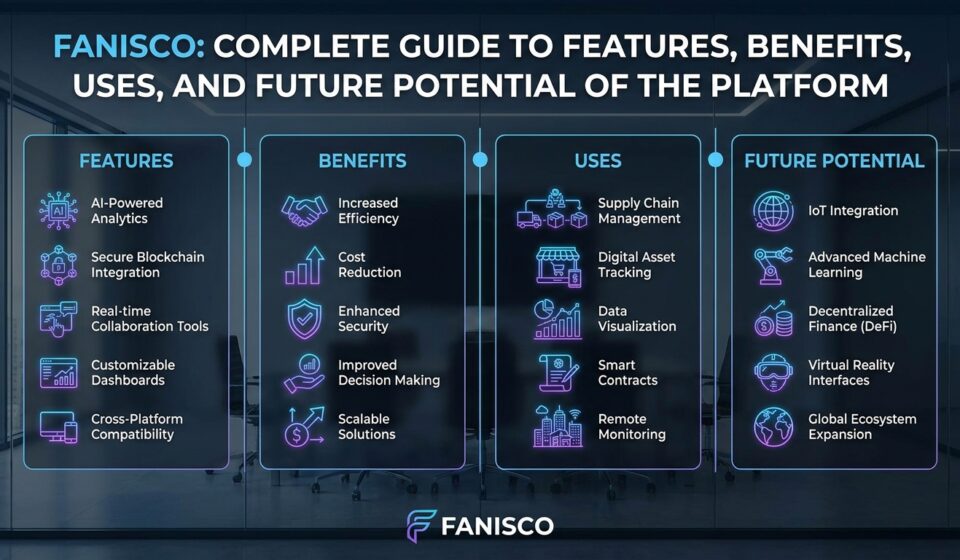
Fanisco: Complete Guide to Features, Benefits, Uses, and Future Potential of the Fanisco Platform

Fanisco is a modern digital concept often associated with innovative platforms, brand ecosystems, or emerging online service frameworks designed to improve user engagement, streamline digital operations, or enhance customer interaction. While the exact interpretation of Fanisco can vary depending on its implementation, it is generally positioned as a flexible, scalable solution that supports digital transformation across different industries.
In today’s fast-paced digital environment, businesses and users demand platforms that are efficient, intuitive, and adaptable. Fanisco is typically described as a system that aligns with these expectations by focusing on usability, integration, and performance optimization. Whether applied in business, technology, or creative ecosystems, Fanisco represents a forward-thinking approach to digital structure and functionality.
This article explores Fanisco in detail, including its possible architecture, features, benefits, use cases, and future potential in the evolving digital landscape.
What is Fanisco?
Fanisco can be understood as a conceptual or branded digital platform designed to unify multiple functions within a single ecosystem. It may include tools for communication, data management, automation, analytics, or customer engagement depending on its specific application.
At its core, Fanisco is centered around three main principles:
- Simplification of digital processes
- Integration of multiple systems into one environment
- Enhancement of user experience through intelligent design
Rather than operating as a single-purpose tool, Fanisco is often positioned as a multi-functional framework that can adapt to different industries and needs. This flexibility is one of its defining characteristics.
In many interpretations, Fanisco acts as a bridge between users and complex digital infrastructures, making technology more accessible and efficient.
Core Features of Fanisco
Fanisco is typically associated with a set of features designed to improve usability, performance, and scalability. These features may vary depending on implementation, but the following represent the most common conceptual components.
1. Unified Dashboard System
Fanisco often includes a centralized dashboard that allows users to access multiple tools and functions in one place. This reduces the need to switch between different applications and improves workflow efficiency.
2. Integration Capabilities
One of the strongest aspects of Fanisco is its ability to integrate with external platforms, APIs, and services. This allows organizations to connect existing systems without replacing their entire infrastructure.
3. Automation Tools
Automation is a key feature in modern digital systems, and Fanisco typically supports automated workflows such as task scheduling, notifications, data processing, and reporting.
4. Real-Time Data Processing
Fanisco platforms are often designed to handle real-time data updates, enabling users to make decisions based on the most current information available.
5. User-Friendly Interface
Ease of use is a priority. Fanisco systems generally focus on clean design, intuitive navigation, and responsive layouts that work across devices.
6. Security and Data Protection
Security features such as encryption, multi-factor authentication, and secure API connections are often integral to Fanisco-based systems.
How Fanisco Works
The operational structure of Fanisco can be understood as a layered system where different components interact to deliver a seamless user experience.
Step 1: Data Input
Data enters the system from multiple sources such as users, third-party applications, sensors, or databases.
Step 2: Processing Layer
Once data is collected, Fanisco processes it using built-in logic engines, filters, or AI-based algorithms depending on the system design.
Step 3: Integration Layer
Processed data is then synchronized across connected tools and platforms, ensuring consistency and accessibility.
Step 4: Output and Visualization
Users interact with the processed data through dashboards, reports, or automated actions triggered by system rules.
Step 5: Feedback Loop
Fanis-co continuously improves performance by analyzing user behavior and system efficiency, adjusting processes accordingly.
Benefits of Using Fanisco
Fanis-co offers several advantages that make it attractive for organizations and users seeking digital efficiency.
Improved Operational Efficiency
By centralizing multiple functions, Fanis-co reduces time spent switching between systems and improves workflow continuity.
Enhanced Decision-Making
Real-time insights and integrated analytics help users make faster and more informed decisions.
Scalability
Fanis-co systems are designed to grow with user needs, making them suitable for both small businesses and large enterprises.
Cost Optimization
By reducing dependency on multiple software tools, organizations can lower operational costs.
Better Collaboration
Fanisco often includes collaboration tools that allow teams to communicate and work together more effectively.
Use Cases of Fanisco
Fanis-co can be applied in a wide range of industries and scenarios due to its flexible design.
Business Management
Companies can use Fanis-co to manage operations, track performance metrics, and streamline internal communication.
E-Commerce Platforms
Online retailers can leverage Fanis-co to integrate inventory systems, customer data, and sales analytics into one platform.
Education Systems
Educational institutions may use Fanis-co to manage courses, student data, and digital learning environments.
Healthcare Management
In healthcare, Fanisco-like systems can support patient data management, appointment scheduling, and reporting systems.
Marketing and Analytics
Marketing teams can use Fanis-co to track campaigns, analyze customer behavior, and automate reporting processes.
Fanisco Architecture Overview
Although Fanis-co may vary in structure depending on implementation, it generally follows a modular architecture.
Front-End Layer
This is the user interface where interaction occurs. It is designed for accessibility and responsiveness across devices.
Back-End Layer
The back-end handles data processing, business logic, and system operations.
Database Layer
All information is stored in structured databases that support fast retrieval and secure storage.
API Layer
APIs enable Fanis-co to connect with external applications and services.
Security Layer
Security protocols ensure that data remains protected across all system layers.
Challenges and Limitations of Fanisco
While Fanis-co offers many benefits, it also comes with certain challenges.
Implementation Complexity
Setting up a fully integrated system can require technical expertise and planning.
Integration Issues
Connecting legacy systems may require additional customization.
Learning Curve
Users may need time to adapt to new workflows and interfaces.
Cost of Advanced Features
While basic systems may be affordable, advanced functionalities can increase overall costs.
Fanisco vs Traditional Systems
Comparing Fanis-co to traditional standalone systems highlights its advantages.
Centralization vs Fragmentation
Traditional systems often operate independently, while Fanis-co centralizes multiple tools.
Automation vs Manual Processes
Fanisco emphasizes automation, reducing manual workload.
Real-Time vs Delayed Data
Traditional systems may rely on periodic updates, whereas Fanis-co supports real-time processing.
Scalability
Fanis-co systems are generally more adaptable to growth and change.
Future of Fanisco
The future of Fanis-co is closely tied to advancements in artificial intelligence, cloud computing, and digital ecosystems.
AI Integration
Future versions of Fanis-co are likely to include advanced AI features for predictive analytics and decision automation.
Increased Personalization
Systems will become more adaptive to individual user behavior and preferences.
Greater Cloud Dependency
Cloud-based infrastructure will continue to enhance scalability and accessibility.
Enhanced Automation
More business processes will be fully automated through Fanisco systems.
Cross-Platform Expansion
Fanisco may evolve into fully cross-platform ecosystems connecting mobile, desktop, and IoT devices.
Real-World Impact of Fanisco
Fanisco-like systems are increasingly influencing how organizations structure their digital environments. By consolidating tools and improving data flow, they help businesses become more agile and responsive.
Organizations adopting such systems often report improved efficiency, reduced operational friction, and better alignment between departments. In competitive markets, this level of optimization can significantly impact long-term success.
Conclusion
Fanisco represents a modern approach to digital integration, combining usability, automation, and scalability into a unified framework. While its exact definition may vary depending on implementation, the core idea remains consistent: simplifying complex digital ecosystems into a more manageable and efficient structure.
As technology continues to evolve, systems like Fanis-co are expected to play an increasingly important role in shaping how businesses and users interact with digital environments. Its focus on integration, real-time processing, and automation makes it a valuable concept in the ongoing transformation of modern technology infrastructure.