

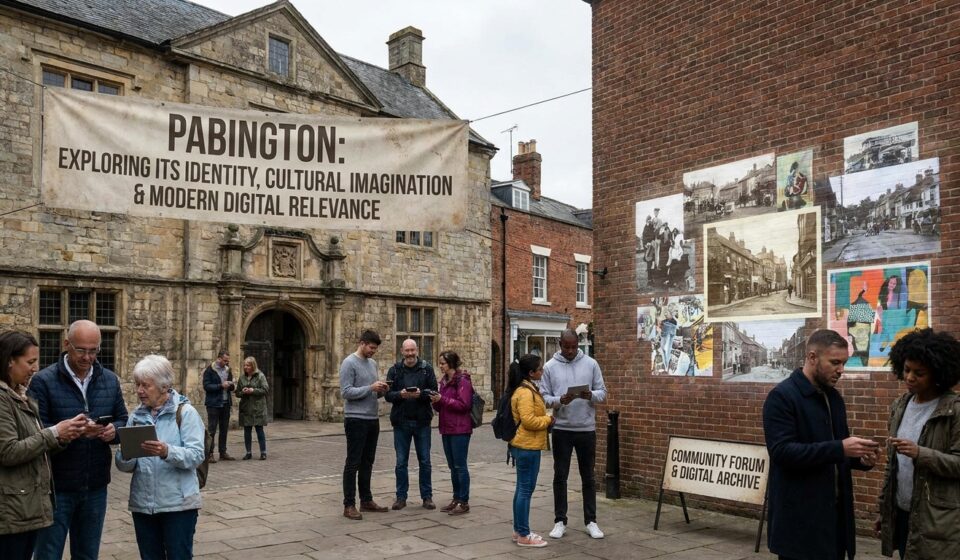

Pabington is a distinctive and evocative name that carries the feel of a traditional settlement while remaining flexible enough for modern interpretation. In today’s world, where identity, branding, and storytelling intersect across digital platforms, names like Pabington often gain significance beyond geography. They become creative tools used in literature, branding, world-building, and conceptual design.
Names are powerful because they shape perception before meaning is fully defined. Pabington feels structured and familiar, yet it is open enough to be imagined in many different ways. It could represent a historic town, a fictional world, a digital platform, or even a symbolic identity within a larger narrative universe.
This article explores Pabington as a conceptual identity, examining its cultural tone, imagined history, digital relevance, and creative potential in modern global communication.
The Linguistic Character of Pabington
Pabington has a structure that resembles traditional English place names, particularly those ending in “-ton,” a suffix historically associated with towns or settlements. This immediately gives the name a sense of grounding and familiarity.
The prefix “Pabing” feels unique and undefined, which allows creative flexibility. Combined with “-ton,” the name balances originality with tradition. This duality is what makes Pabington especially suitable for storytelling or branding purposes.
Names with this kind of structure often evoke a sense of heritage, suggesting long-established communities or historically rich environments. Even without a real-world reference, Pabington feels like a place with history and depth.
This linguistic balance is one of the reasons such names are widely used in fiction, branding, and digital world-building.
Imagined Historical Background of Pabington
If Pabington were considered a historical settlement, it could be imagined as originating from early agricultural development. Many traditional towns began as small farming communities built around fertile land, rivers, or trade routes.
In this imagined context, Pabington might have started as a modest village that gradually expanded into a structured town. Local industries could have included farming, weaving, woodworking, or small-scale trade.
Over time, such a settlement would likely develop key landmarks such as a central market square, a parish church, and residential cottages built from local materials. These elements would reflect a typical evolution of rural communities into established towns.
Historical imagination allows Pabington to function as a narrative space where cultural evolution, tradition, and community life can be explored.
Cultural Identity and Symbolism of Pabington
Culturally, Pabington can be interpreted as a symbol of community, continuity, and tradition. Names that resemble historic settlements often evoke feelings of stability and belonging.
In storytelling, such names are frequently used to represent places where human relationships and local customs play a central role. Pabington could easily function as a setting where generational stories unfold and cultural values are preserved over time.
Symbolically, Pabington might represent the idea of rooted identity in a rapidly changing world. As modern life becomes more digital and fast-paced, imagined places like Pabington offer a contrast grounded in familiarity and heritage.
This symbolic quality makes it useful not only in fiction but also in branding and creative expression.
Pabington in Modern Digital Culture
In the digital age, names are no longer limited to physical locations or traditional meanings. They are used across online platforms, virtual environments, and creative ecosystems.
Pabington could easily exist as a digital concept such as a virtual city, online community, game world, or immersive narrative environment. Its structured yet flexible identity makes it suitable for digital world-building.
Virtual environments often require names that feel believable and immersive. Pabington fits this requirement because it sounds like a real place while still being entirely open to interpretation.
As technologies like virtual reality and augmented reality continue evolving, names like Pabington may become increasingly important in shaping digital experiences and environments.
Pabington as a Branding Concept
In modern branding, uniqueness and memorability are essential. Pabington has qualities that make it suitable for use as a brand name across multiple industries.
Its traditional structure gives it a sense of trust and reliability, while its uniqueness ensures it stands out in competitive markets. This combination is highly valuable in branding strategy.
Pabington could represent a wide range of businesses, including hospitality, lifestyle products, creative studios, or digital platforms. Its flexibility allows it to adapt to different brand identities without losing coherence.
Brand storytelling could position Pabington as a heritage-inspired name that blends tradition with modern innovation, appealing to audiences who value authenticity and creativity.
Creative Writing and Storytelling Potential
Pabington is particularly well-suited for creative writing and storytelling. Fictional worlds often rely on strong place names to build immersive environments.
In literature, Pabington could serve as the setting for historical fiction, mystery stories, or contemporary dramas. It could also be used in fantasy or speculative fiction as a central town with unique cultural significance.
Writers often choose names like Pabington because they feel grounded enough to be believable while still open enough for creative interpretation.
In storytelling, the name itself can help shape the tone of the narrative, suggesting themes of tradition, community, or hidden history.
Psychological Perception of the Name Pabington
From a psychological perspective, names like Pabington influence how people perceive meaning and familiarity. The structured ending “-ton” creates an association with towns and settlements, which triggers a sense of stability and order.
At the same time, the unfamiliar prefix adds curiosity and uniqueness. This combination encourages engagement because it feels both recognizable and intriguing.
Human cognition often responds positively to names that balance familiarity with novelty. Pabington achieves this balance effectively, making it memorable and adaptable across different contexts.
This psychological effect is one reason such names are widely used in branding, fiction, and digital identity creation.
Global Relevance and Adaptability
In a globalized world, names must be accessible across languages and cultures. Pabington has a neutral and structured form that makes it easy to pronounce and adapt internationally.
Its lack of strong cultural or linguistic restriction allows it to function effectively in diverse environments. This makes it suitable for global branding, digital platforms, and international storytelling.
Global adaptability is increasingly important in modern communication, where audiences come from different linguistic backgrounds and cultural contexts.
Pabington’s simplicity and structure give it strong potential for universal use.
Pabington in Future Digital Ecosystems
As digital environments continue to evolve, especially with advancements in artificial intelligence, virtual reality, and immersive media, names like Pabington will likely become even more significant.
Virtual cities, AI-generated worlds, and interactive storytelling platforms require names that feel realistic yet flexible. Pabington fits naturally into such systems.
In the future, Pabington could represent a digital environment where users interact, explore narratives, or engage with AI-driven experiences.
The evolution of digital identity will continue to expand the importance of adaptable conceptual names like Pabington.
Conclusion
Pabington is more than just a name. It is a flexible conceptual identity that can represent history, culture, branding, digital environments, and creative storytelling. Its structured yet open-ended nature allows it to exist across multiple interpretations without losing coherence.
In a world where language, identity, and digital culture are constantly evolving, names like Pabington demonstrate how meaning can be shaped through imagination and context.
Whether viewed as a historical town, a fictional setting, or a modern digital concept, Pabington reflects the ongoing relationship between tradition, creativity, and innovation in global communication.